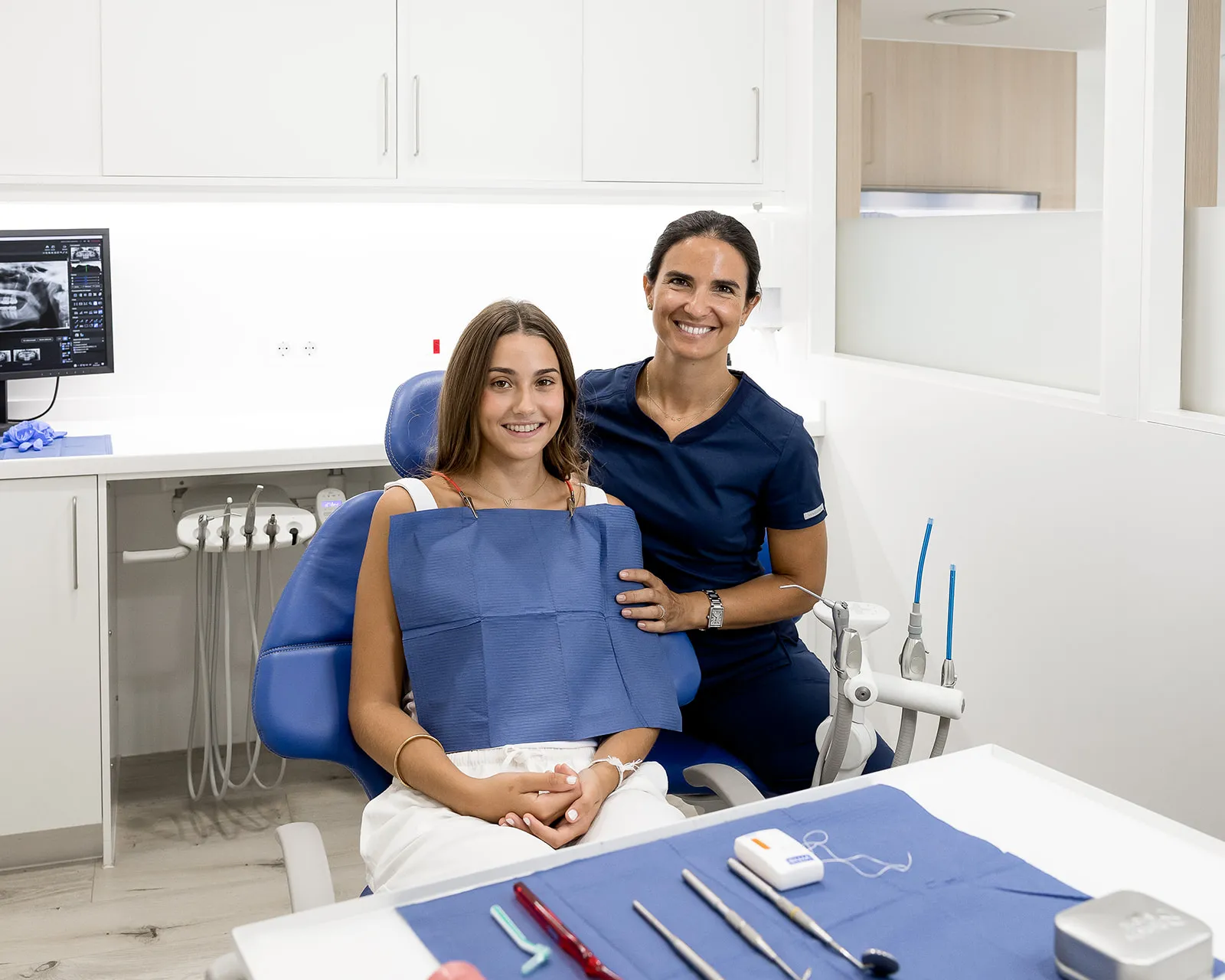
Dental hygiene and daily cleaning habits are essential to help prevent periodontal disease.
Remember that it is important to visit the dentist at least once a year for a professional dental cleaning to remove any bacterial plaque from the mouth.
Slide the circle from side to side to see the before and after.
Gum recession
A 21-year-old patient presented with recession or loss of gum tissue in the lower central incisor. The patient reported discomfort when brushing and presented with inflammation and associated calculus.
After an adequate hygiene phase, a connective tissue graft was performed to restore the lost tissue and eliminate all the symptoms reported by the patient.
Gum loss
This 31-year-old patient was about to begin orthodontic treatment and was concerned about gum loss in her lower incisors. After thorough hygiene, and prior to orthodontics, we performed a connective tissue graft in order to eliminate the frenulum insertion, cover the roots, and restore keratinized gum tissue.
It is important to check the gums before orthodontic treatment, as some situations can worsen with tooth movement.
Coronal lengthening
This 28-year-old patient came to the clinic concerned about the aesthetics of her smile. She showed a lot of gum when she smiled and had small, square teeth. She suffered from altered passive eruption, a condition that causes your teeth to be hidden by gum.
Thanks to a crown lengthening procedure, in which we removed the excess gum and bone, we were able to expose all of her teeth. She is delighted with her new smile!
Connective tissue graft
This 50-year-old patient was concerned about the aesthetics of his smile due to gum recession or loss. Gum loss can be caused by a traumatic (very strong) brushing habit, and it is important to teach proper oral hygiene techniques to all patients.
In order to cover the exposed roots, we performed a connective tissue graft. The patient is very satisfied with the result!
Periodontal pockets
This 50-year-old patient presented with chronic inflammation with bleeding on brushing and periodontal pockets. The X-ray shows bone loss. Without treatment, she would have continued to lose bone support until the tooth needed to be extracted.
Fortunately, we were able to intervene in time and, through guided tissue regeneration with particulate bone and enamel proteins, we recovered part of the lost bone. The patient has been able to keep all her teeth and continues to come in regularly for maintenance appointments.